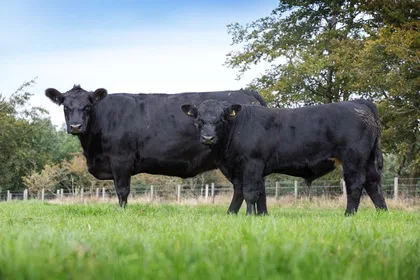
Main advantage – Marbled meat structure and high hardiness
The Angus is a cattle breed widely used in beef production. It was developed from cattle originating in the Scottish regions of Aberdeenshire and Angus and is widely known around the world as “Aberdeen Angus.” Owing to the conditions of its native environment, the breed is highly hardy and can withstand Scotland’s harsh, snowy, and rainy climate. Females (cows) weigh approximately 550 kg, while males (bulls) weigh around 850 kg. These animals have substantial muscle mass and are considered medium-sized cattle. Aberdeen Angus cattle are raised primarily for beef. Their meat is regarded as among the highest quality in the world due to its marbling, high juiciness, and excellent flavour.
Breed – “Simmental”
Origin – Switzerland
Main advantage – High beef and milk productivity (dual-purpose breed)
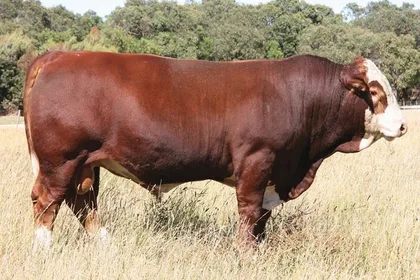
The Simmental is one of the world’s most widespread and versatile cattle breeds. It was developed through the selection and centuries-long improvement of local cattle from the valley of the Simme River in western Switzerland. Owing to the conditions of its native mountainous environment, the breed is highly hardy and adapts readily to varied terrain and sharp climatic changes. Females (cows) weigh approximately 700–800 kg, while males (bulls) weigh around 1,100–1,300 kg. These animals are characterized by strong musculature, a large frame, a long body, and distinctive white-and-reddish (or pied) colouring. Simmental cattle are raised for both beef and milk production. Their meat is regarded as among the highest quality due to its high yield, appealing eating qualities, and the even distribution of fat within the muscle tissue.
Breed – “Limousin”
Origin – France
Main advantage – High lean meat yield and low fat content
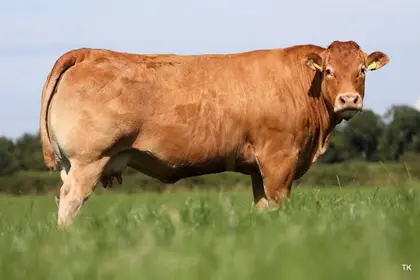
The Limousin is a cattle breed widely used in beef production. It was developed through the selection and improvement of local cattle from the Limousin region in southwestern France. Owing to the conditions of its native environment, the breed is highly hardy and adapts readily to different climates, including severe weather conditions. Females (cows) weigh approximately 600–650 kg, while males (bulls) weigh around 950–1,150 kg. These animals are characterized by substantial muscle mass, a broad chest, and a strong body structure. Limousin cattle are raised primarily for high-quality beef. Their meat is regarded as among the highest quality due to its high carcass yield (65–68%), fine-fibred texture, and low fat content.
Breed – “Hereford”
Origin – England
Main advantage – Rapid weight gain on pasture and high hardiness
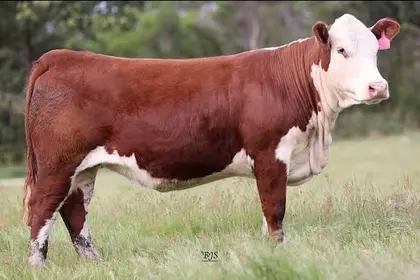
The Hereford is a cattle breed widely used in beef production. It was developed through the selection of local cattle from Herefordshire in western England and their adaptation to pasture-based production. Owing to the conditions of its native environment, the breed is highly hardy and can withstand a wide range of demanding climates, from extreme heat to freezing cold. Females (cows) weigh approximately 540–700 kg, while males (bulls) weigh around 800–1,200 kg. These animals are characterized by substantial muscle mass, a strong bone structure, short legs, and a distinctive white head. Hereford cattle are raised primarily for beef. Their meat is regarded as among the highest quality because the animals make efficient use of pasture and gain weight rapidly with relatively low feed consumption, while the beef is also noted for its tenderness and juiciness.
Breed – “Charolais”
Origin – France
Main advantage – Rapid growth, large body mass, and high lean meat yield
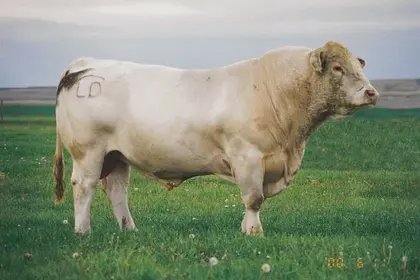
The Charolais is a cattle breed widely used in beef production. It was developed through the selection and improvement of local cattle from the Charolais region in eastern France. Owing to the conditions of its native environment, the breed is highly hardy and adapts readily to different climates and pasture conditions. Females (cows) weigh approximately 700–900 kg, while males (bulls) weigh around 1,000–1,400 kg or more. These animals have exceptionally large muscle mass, a broad and deep body, and a characteristic white or cream coat. Charolais cattle are raised primarily for intensive beef production. Their meat is among the most highly valued worldwide due to efficient feed utilization, a high carcass yield (65–66%), and a lean, tender texture.
Breed – “Belgian Blue”
Origin – Belgium
Main advantage – Exceptionally developed musculature and maximum meat yield
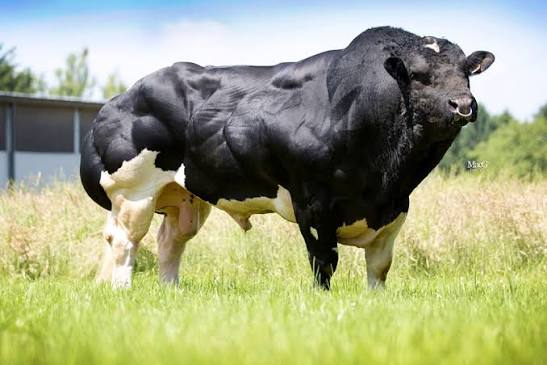
The Belgian Blue is a cattle breed widely used in beef production. It was developed in the 19th century in central and northern Belgium by crossing local cattle with Shorthorn and Charolais breeds. Due to a natural genetic mutation (double muscling), the breed is well suited to modern intensive feeding systems. Females (cows) weigh approximately 850–900 kg, while males (bulls) weigh around 1,100–1,250 kg. These animals are characterized by exceptionally large muscle mass, prominent hindquarter musculature, fine bones, and distinctive blue-grey, white, or black-spotted colouring. Belgian Blue cattle are raised primarily for lean meat production. Their meat is regarded as among the highest quality because of its minimal fat content, high carcass yield (over 70%), and exceptionally tender texture.